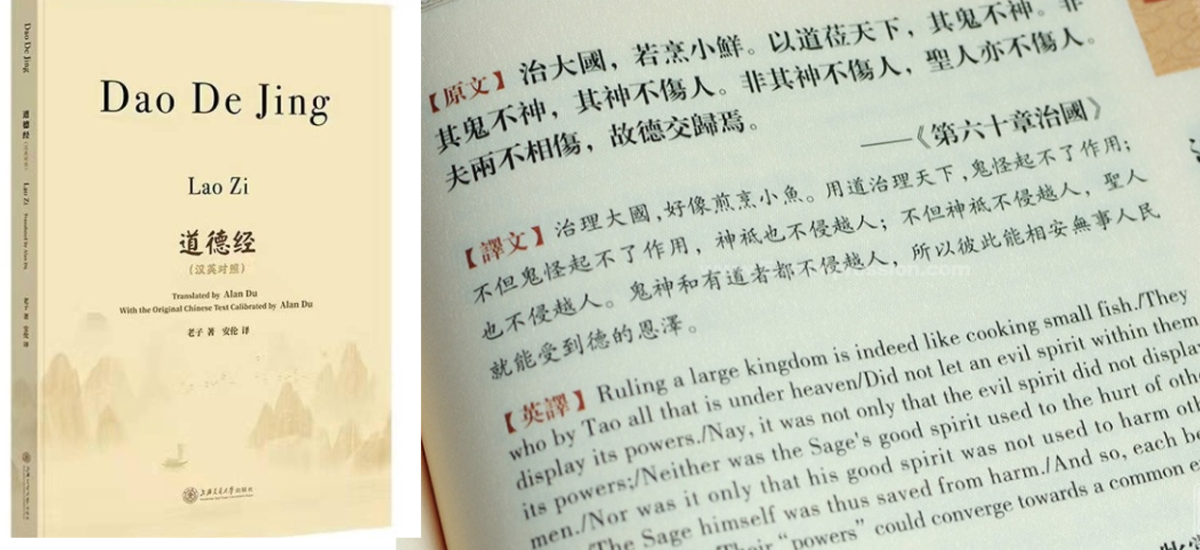
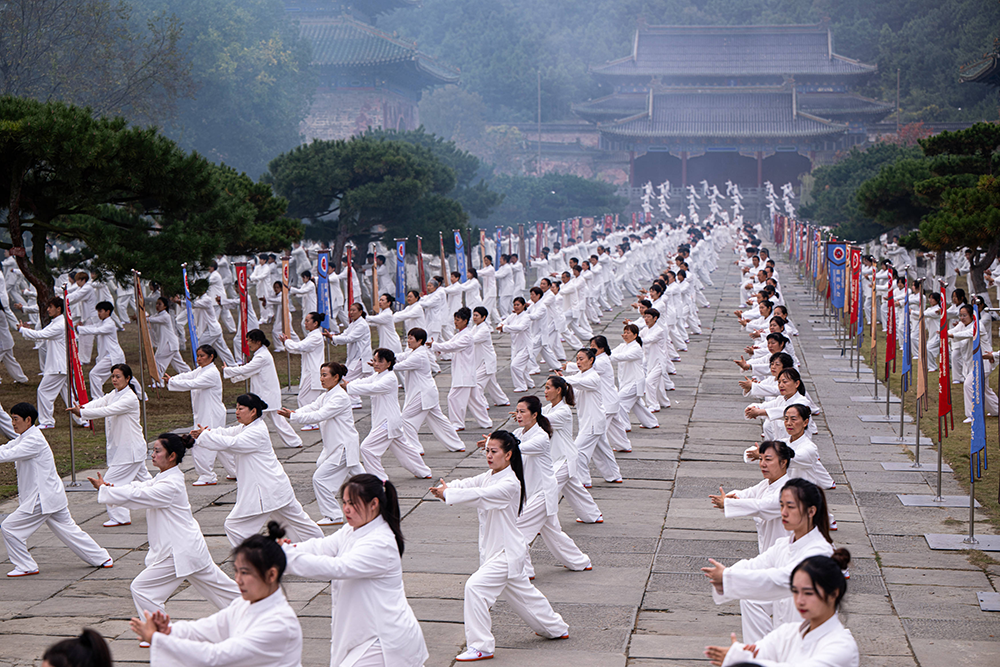
Tao and Dongxiao or Xiao
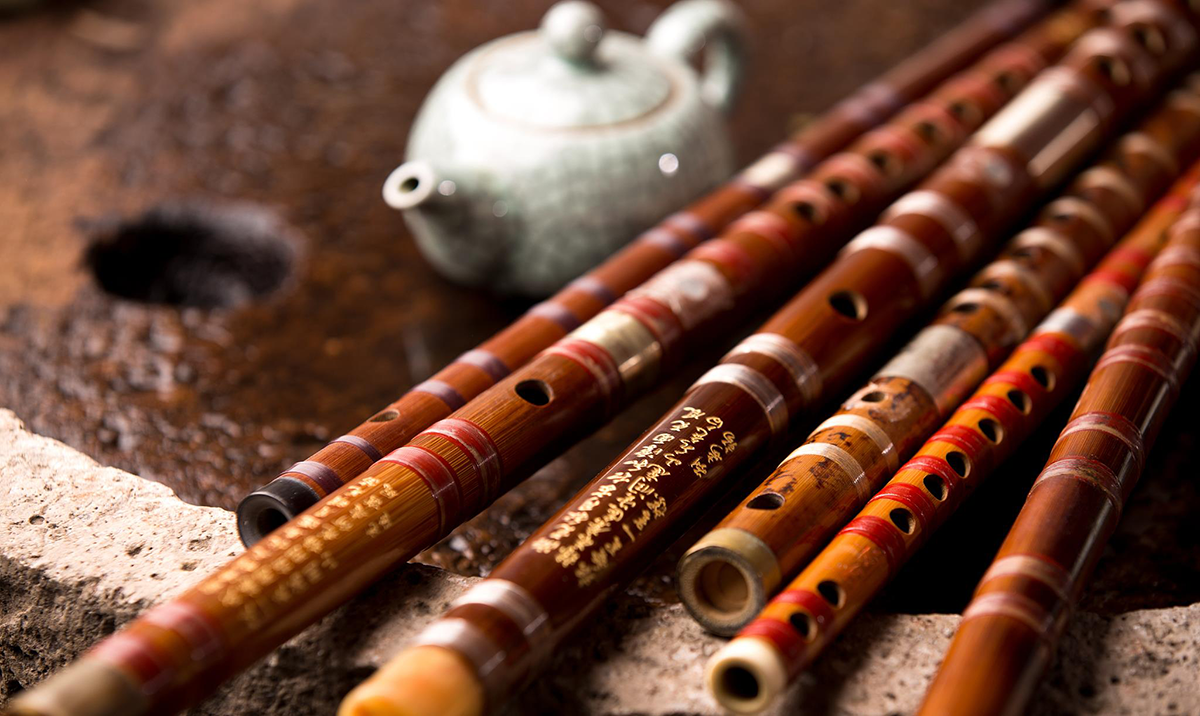
Dong xiao a Traditional Chinese vertical flute, seven holes echo the Dipper; one Daoist breath hushes the world—breathing with sky and earth, till mercury and lead fall silent, only clear light remains.
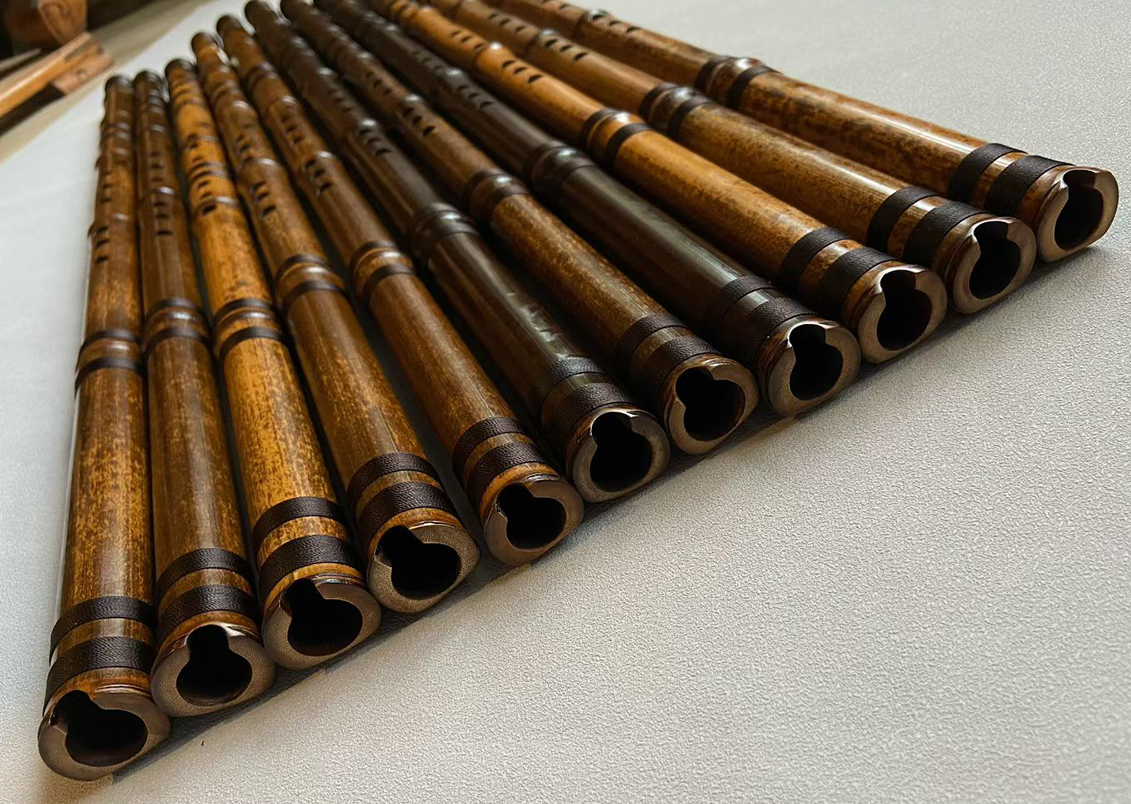
Dong xiao is played vertical bamboo flute, embodies Daoist principles through its form and music. Its hollow body symbolizes wu (emptiness/non-being), allowing breath—qi—to become sound. In Daoist practice, playing it is a form of inner alchemy: the musician’s controlled breath mirrors spiritual refinement, where scattered thoughts settle like dust in stillness.
Its sparse, flowing melodies do not dominate but follow natural rhythms, echoing the Daoist idea of wuwei (non-action). Through this instrument, one learns to listen beyond notes—to the silence between, where harmony with heaven and earth arises. The dongxiao thus becomes not just an instrument, but a tool for attunement, transforming breath into resonance, and resonance into clarity.
"The character of the Xiao: empty, quiet, dark, distant, secluded"
The flute brings heavenly frost, the zither gives rise to ocean waves
1. Emptiness (Kong)
"Emptiness" here is an aesthetic image, a characteristic of nature that shapes a context of vast spatiality. Examples include mountain valleys with flowing streams, open wilderness under the stars, or even a lone smoke rising in the great desert; these are all aesthetic contexts of "emptiness." As the Tang Dynasty poet Wang Wei wrote: "In the stillness of night, the spring mountain is empty."
When expressing nature, both the Guqin (zither) and the Dongxiao (vertical bamboo flute) often evoke this aesthetic realm of "emptiness." It seems that within this vast space, humanity becomes merely an embellishment. This is a technique frequently used in traditional Chinese painting: man is depicted as a tiny dot within the space, thereby highlighting nature's inclusiveness and the life-affirming spaciousness it contains.
The Tang poet Qiu Dan wrote: "Dew drops sing upon the wutong leaves, autumn wind brings forth the osmanthus bloom. Within this scene are companions learning the Way, playing the xiao amidst the mountain moon."
The Ming poet Yang Ji wrote: "The river is still, the moon rests in the water; the mountain is empty, autumn fills the pavilion. I play for myself and then cease; initially, I sought no listener."
These two poems describe the xiao and the guqin respectively, yet the natural atmosphere they create is identical. Like a Chinese painting, they first lay out the scenery to establish a sense of space, only then revealing human activity. The musical qualities of the xiao and the qin, much like the methods of Chinese painting, aim to construct a life pattern defined by spatial awareness. Neither the qin nor the xiao ever creates a feeling of constriction or tightness.
2. Stillness (Jing)
The xiao is termed "elegant" primarily because it can express a sentiment of tranquility. This emotion is not a shout, but a whisper; not a complaint, but an expression. Stillness is a form of balance, not immobility. The xiao constructs a high-level mechanism for emotional management. Like the guqin, even when expressing intense passion—as in the piece Guangling San—it does not externalize the emotion but rather internalizes it to reveal stillness.
The Song Dynasty scholar Cheng Ju said: "Flowing springs resonate with the zither; pines and bamboos are all like xiao flutes." The aesthetic of "stillness" in the qin and xiao merges with the flowing springs and swaying pines of nature. Stillness is not dead silence; it is the smooth flow of a spring, the gentle swaying of bamboo in the wind. Stillness is a sophisticated form of motion.
If one listens to the xiao expecting adrenaline-pumping excitement, that is not the sound of the literati's xiao. The literati's xiao is more akin to introspection; it is not expressed for the sake of performance, but serves as a means of self-organization through expression.
(Reference: A joint performance by Zha Fuxi and Pu Xuezhai on Guqin and Xiao)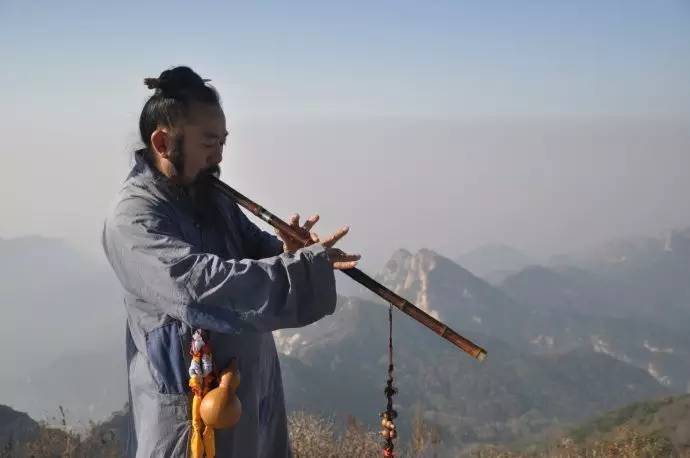
3. Darkness/Dimness (An)
The character of the xiao is not directly bright; rather, it is deep and indifferent. If translated into visual terms, the xiao is a dark color, as is the guqin. Looking at the instruments themselves, the lacquer of the guqin and the bamboo selected for the dongxiao are mostly deep, dark hues—the colors of maturity. Therefore, the sound of the xiao often appears at night, inviting reverie.
A Yuan Dynasty poem states: "The woman of Qin blows the xiao high under the moon." Li Zan of the Yuan Dynasty wrote: "Playing the qin among the pine trees, blowing the xiao in the clear night." The "darkness" of the xiao sound often emerges under the moonlight of night, where its temperament is most prominent. The xiao is like a hermit; its sound appears and disappears subtly, often heard without the player being seen.
Chao Chongzhi of the Song Dynasty said: "In the seventh month at East Lake, the water is level; scaled waves secretly weave the sound of the xiao." The sound of the xiao is unarranged and passive; it seems to be a sound emerging silently and naturally from the shadows. This sound does not disturb, let alone startle; instead, it reveals a detached power atop silence. This power is enduring and possesses latent strength, slowly leading toward the natural principles of life. As Han Shanghui of the Ming Dynasty wrote: "The jade xiao rises from the darkness, startling the spirit; the melody is slow, the rhymes of the Jade Terrace are true."
4. Distance/Farness (Yuan)
The xiao possesses the character of a hermit; it does not neighbor clamor, yet it holds a distant inquiry into nature regarding both time and space. This inquiry is the character of "distance" in the dongxiao. Wang Wei said, "Why blow the xiao towards the blue sky?" indicating that ancients did not only play the xiao in pine groves or studies; sometimes, they let the sound reach straight to the clouds, an inquiry directed at the heavens.
"The qin rests securely on the back, allowing pursuit; lending it to the heavenly wind to deliver the jade xiao" — Song Dynasty, Cheng Gongxu.
Like the guqin, the xiao shares an aesthetic form that questions philosophy through nature. This inquiry elongates their sense of space and time. The beauty of the xiao lies not only in its subtlety but also in its grand pattern of questioning heaven and earth. Threads of xiao sound are like incense smoke, reaching directly to the ears of heaven; it seems that the earthly sound of the xiao can "transmit" certain messages upward.
Compared to the guqin, the performance form of the xiao is closer to storytelling. Because breathing flows in and out during play, emotions rise and fall with it, resembling an indirect language articulating thoughts that cannot be explicitly stated. The nature of the xiao lies in the subtle elaboration of self-dialogue: recalling years past, where events stand vividly before one's eyes—this is the "distance" of time. The character of the xiao lies in the vital inquiry of dialoguing with heaven and earth: distant misty mountains, morning clouds at the horizon, the sun, moon, and stars—this is the "distance" of space.
5. Seclusion/Profound Quiet (You)
"You" is a state of hidden leisure. The "seclusion" of the xiao sound means its character is not competitive, not showy of skill, nor does it express emotions directly. The xiao represents an indirect, leisurely state. This state contains inner vitality but does not exhaust itself in a torrential outpouring. Fang Xianfu of the Ming Dynasty said: "Qin and xiao merge in the secluded cave; flowers and bamboo scent the distant pavilion."
The elegant sentiments of ancient literati are often interpreted through modern artistic concepts. However, the purpose of literati playing instruments is fundamentally different from the modern way of directly expressing feelings. When literati played the xiao or qin, even when expressing sorrow, they stepped back to adopt the perspective of an observer. They would reflect on their own past experiences or look down upon the sufferings of sentient beings and history, generating a vague, indistinct emotion of melancholy, rather than subjectively and actively projecting direct emotions.
"You" is a typical image in Chinese aesthetics. It carries the meaning of depth and distance, corresponding to the "hole" (tunnel) of the dongxiao, and also the meaning of hiding and concealment. This aligns perfectly with the character state of ancient Chinese scholars. "You" is faint and indistinct, neither fully hidden nor fully revealed, much like the artistic conception of ink wash painting.
Summary Poem: "The Xiao"
The various characters described above express the xiao as an elegant instrument embodying the sentiments and characteristics of the literati. Summarizing these traits, I have composed a seven-character regulated verse (Qilu) titled "The Xiao":
One breath comes and goes, singing to the nine heavens,
Ultimate softness keeps faith, bringing joy and longevity.
The heart observes gathering and scattering as wonderful sounds arrive,
Fingers fall and float, transmitting profound, secluded meanings.
Do not say the xiao's sound is merely of the cosmos;
One must spread the purple qi (vital energy) across mountains and rivers.
Who hears the heavenly frost and idly cherishes dreams?
Still, there is a rhyme of the vast ocean filling the boat.
About
Taoist Stuff from Wu dang, 100% Totally handmade. Taichi uniform, instruments, books and much more. Enjoy to explore here and for more details just contact with WhatsApp. Thank you so much.